How to Reserve Trust Monies on a File in Law App

Contents

    You can reserve trust funds on a file in Law App to set aside part of the trust balance for a stated purpose, such as barrister’s fees or stamp duty. The money stays in the trust account, but it can’t be drawn on until the reservation is released or cancelled.

    This guide covers how to reserve funds, edit or release a reservation, view its history, and report on every active reservation across your files.

    What it does

    Sets money aside

    A reservation is held against one trust account on one file. It isn’t a transaction, so no money moves. The file’s Available balance drops by the reserved amount.

    What it blocks

    Stops it being paid out

    Payments, transfers and requisitions are blocked if they would take the trust account balance below the reserved amount.

    Blocked payment? If a payment, transfer or requisition would dip into reserved money, Law App shows: “This payment would draw on reserved funds. Release or cancel the reservation to use this money.” Release or cancel the reservation first, then process the payment.

    How to reserve trust funds on a file

    1. Open the file and go to Financials, then Trust, then the Reserved Funds tab.
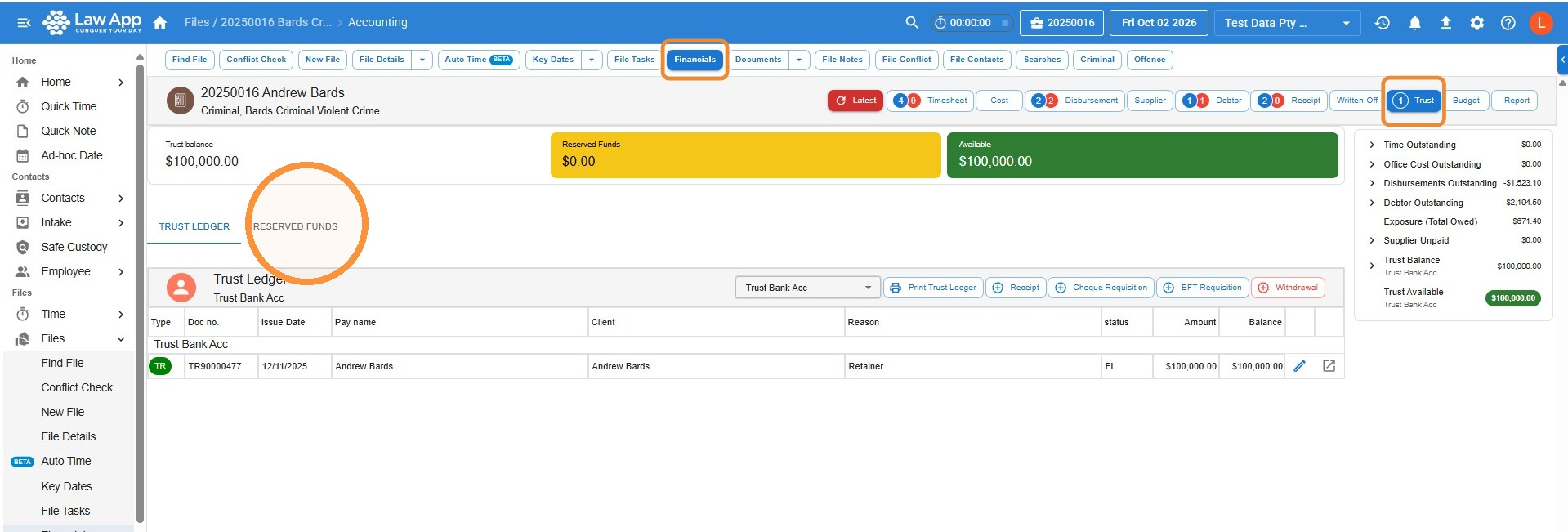
    File Financials screen in Law App with the Financials and Trust buttons highlighted and the Reserved Funds tab circled next to Trust Ledger, above Trust balance, Reserved Funds and Available totals

    1. If your firm has more than one trust account, check the right one is selected in the drop-down. Then click Reserve funds.
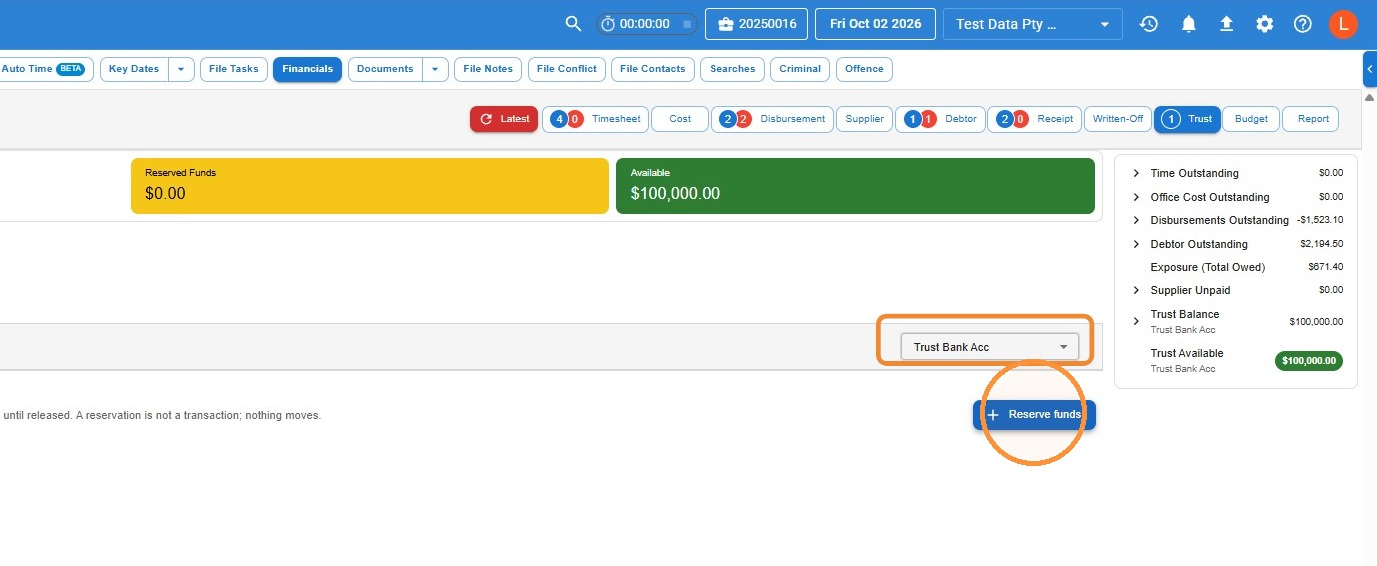
    Reserved Funds tab in Law App with the trust account drop-down set to Trust Bank Acc highlighted and the Reserve funds button circled

    1. Enter the Amount and what the funds are Reserved for, then click Reserve.
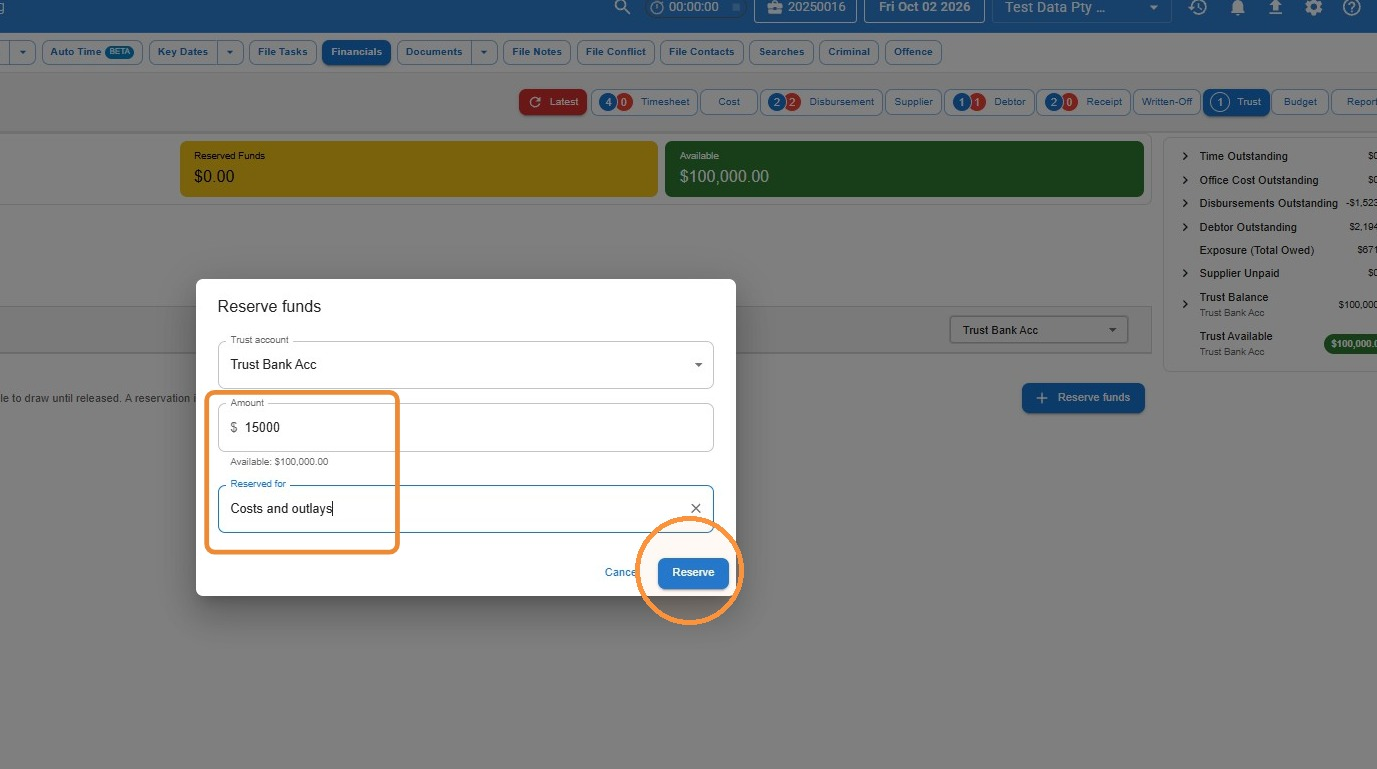
    Reserve funds dialog in Law App showing the Trust account, an Amount of 15000 with the available balance underneath, Reserved for set to Costs and outlays, and the Reserve button circled

    Tip: The dialog shows the available balance under the amount, so you can see how much is free to reserve before you save.

    How to edit or release a reservation

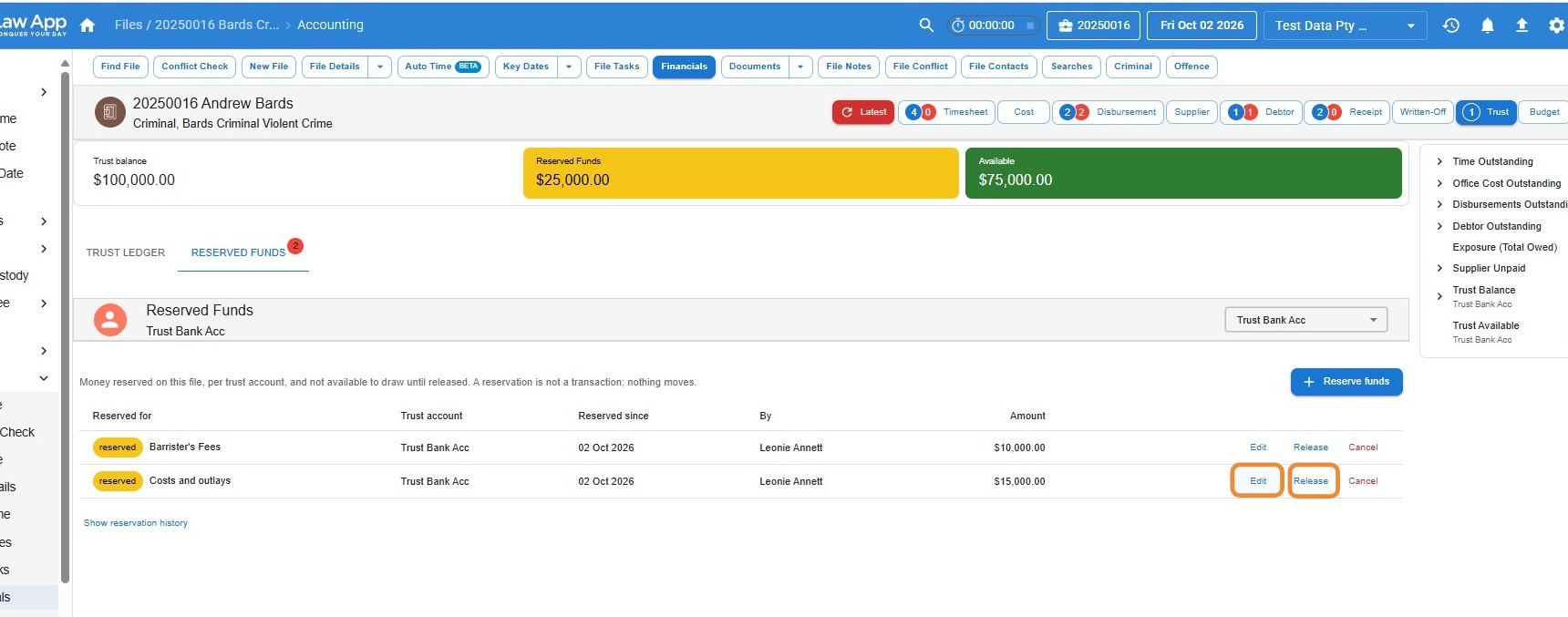
    Each reservation on the Reserved Funds tab has Edit, Release and Cancel options at the end of its row.

    1. To change the amount, click Edit. The amount is the only thing you can edit.
    2. To free up the money, click Release.

    Reserved Funds tab in Law App listing two reservations, Barrister's Fees and Costs and outlays, with the Edit and Release links highlighted on the Costs and outlays row

    Need to change the purpose? If the reservation is now for something different, cancel it and create a new reservation rather than editing it.

    How to view reservation history

    1. On the Reserved Funds tab, click Show reservation history under the list.
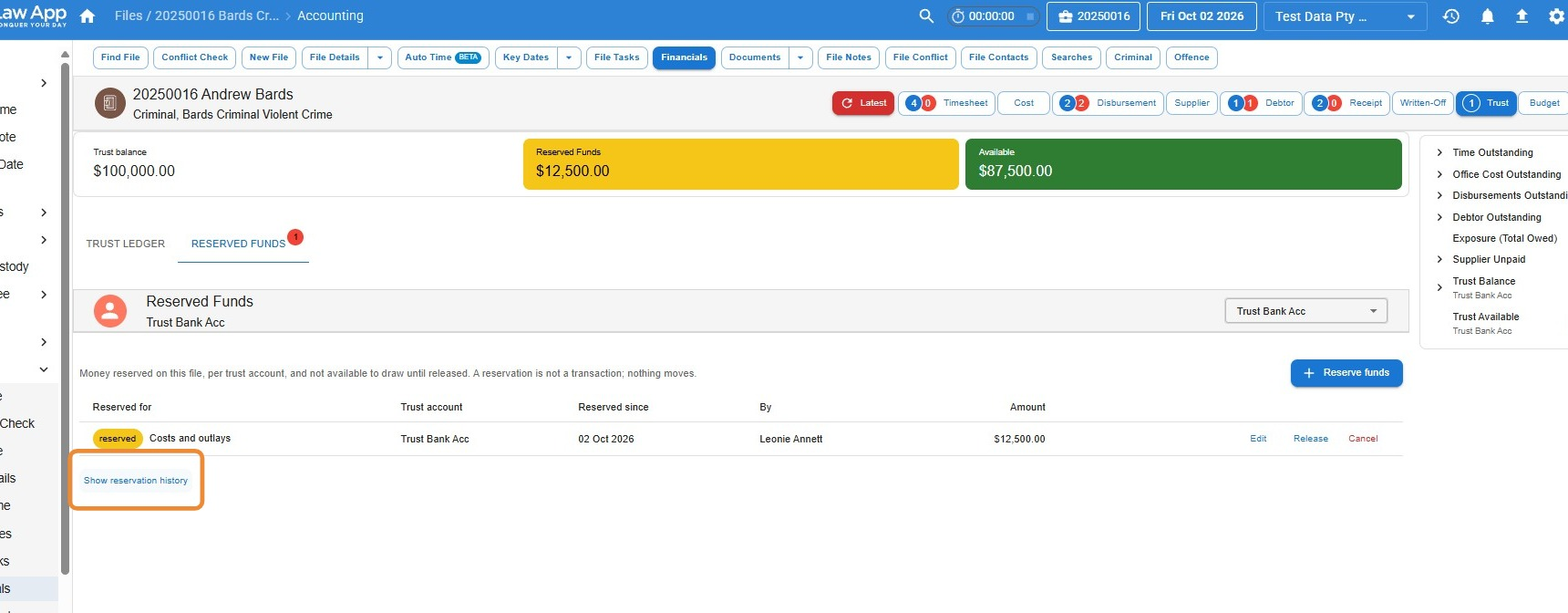
    Reserved Funds tab in Law App with one active reservation for Costs and outlays and the Show reservation history link highlighted below it

    1. You’ll see every current and past reservation on the file, with a log of each change and release, including who made it and when.
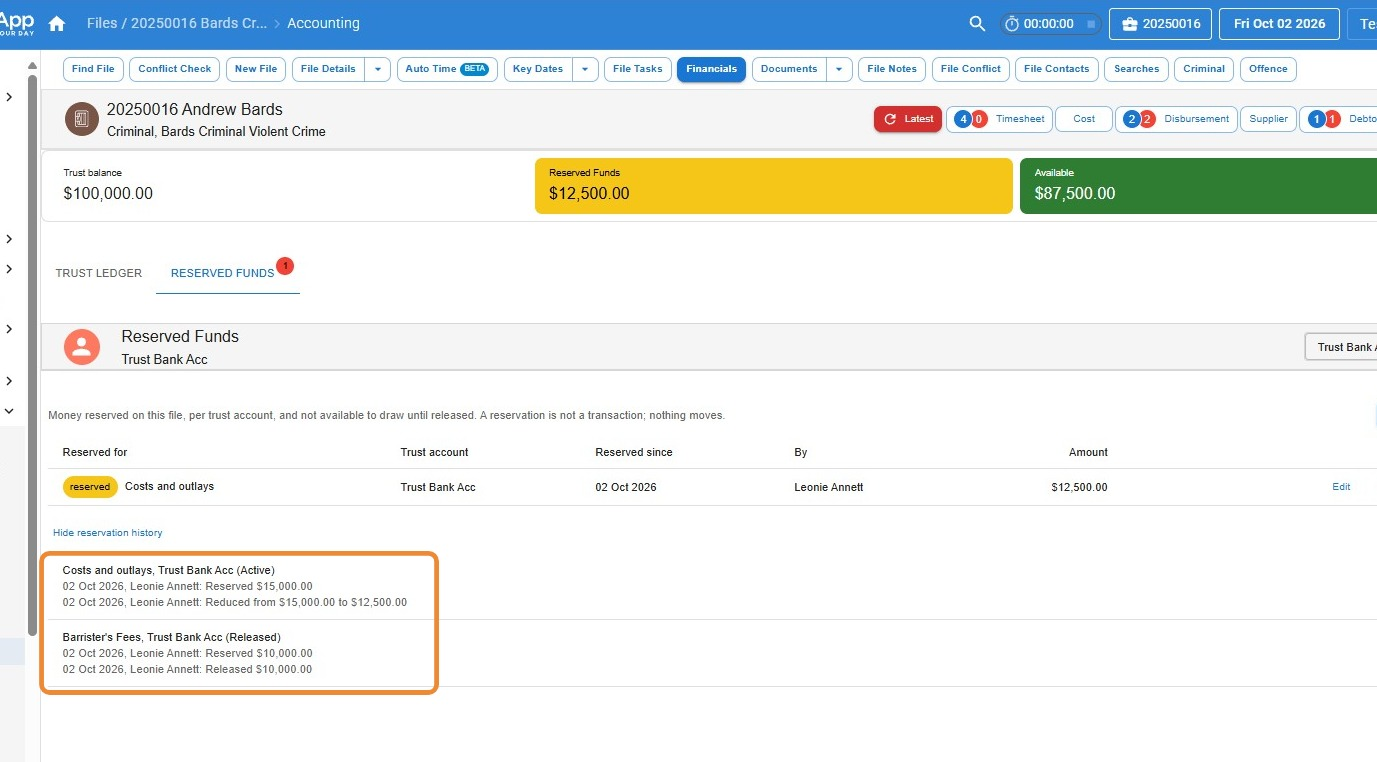
    Reservation history in Law App showing an active Costs and outlays reservation reduced from $15,000 to $12,500, and a released Barrister's Fees reservation of $10,000, each with date and user

    How to report on reserved trust funds

    The Reserved trust funds report lists all active reservations across every file in one place.

    1. From the left menu, go to Reports, then Dashboard, and select Reserved trust funds under the Trust group.
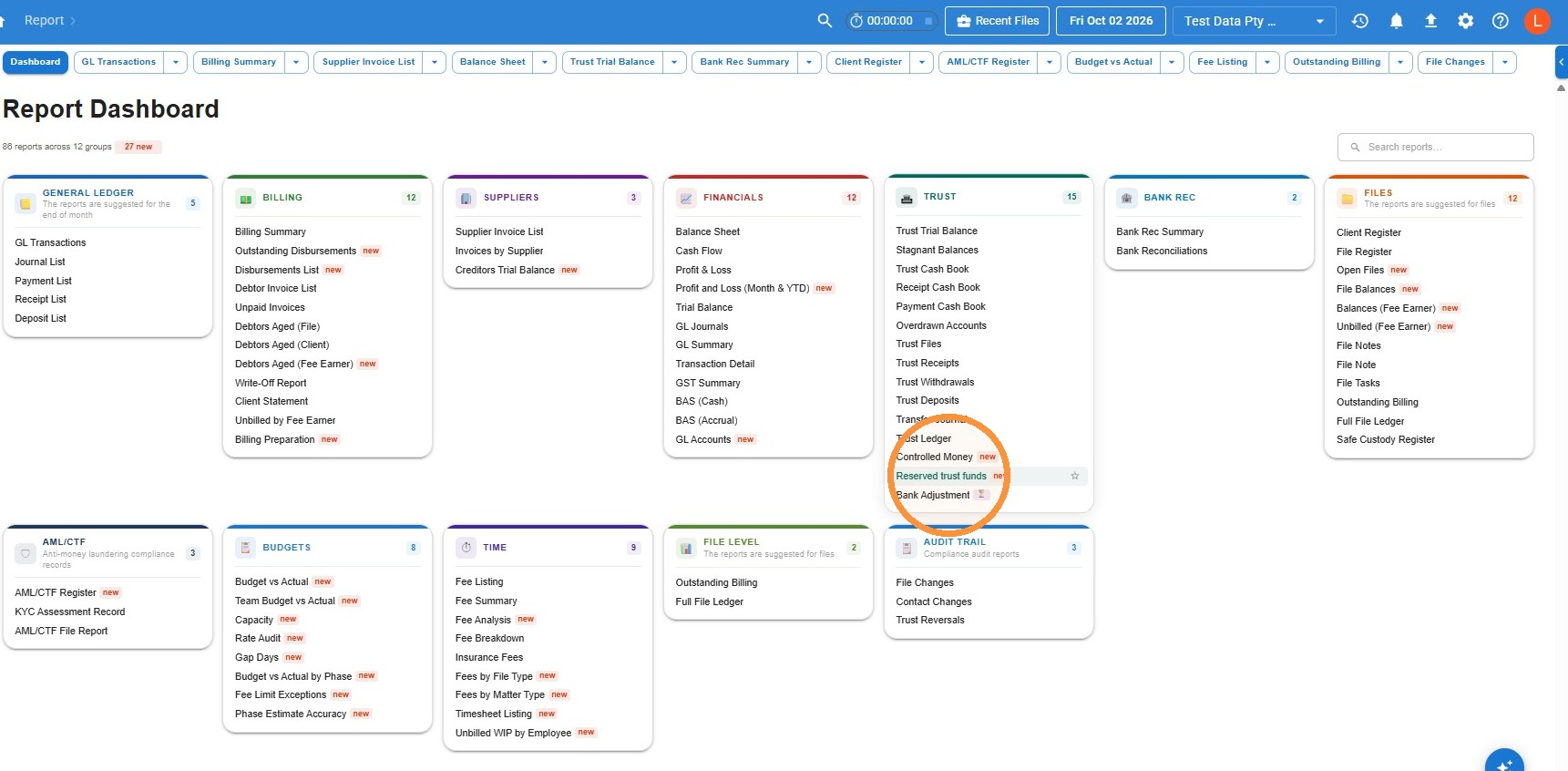
    Report Dashboard in Law App with the Trust group of reports shown and Reserved trust funds circled near the bottom of the list

    1. The report shows each active reservation with its file, matter, purpose, trust account, amount, date and who created it. Use the Matter or Reserved for search boxes to filter the list.
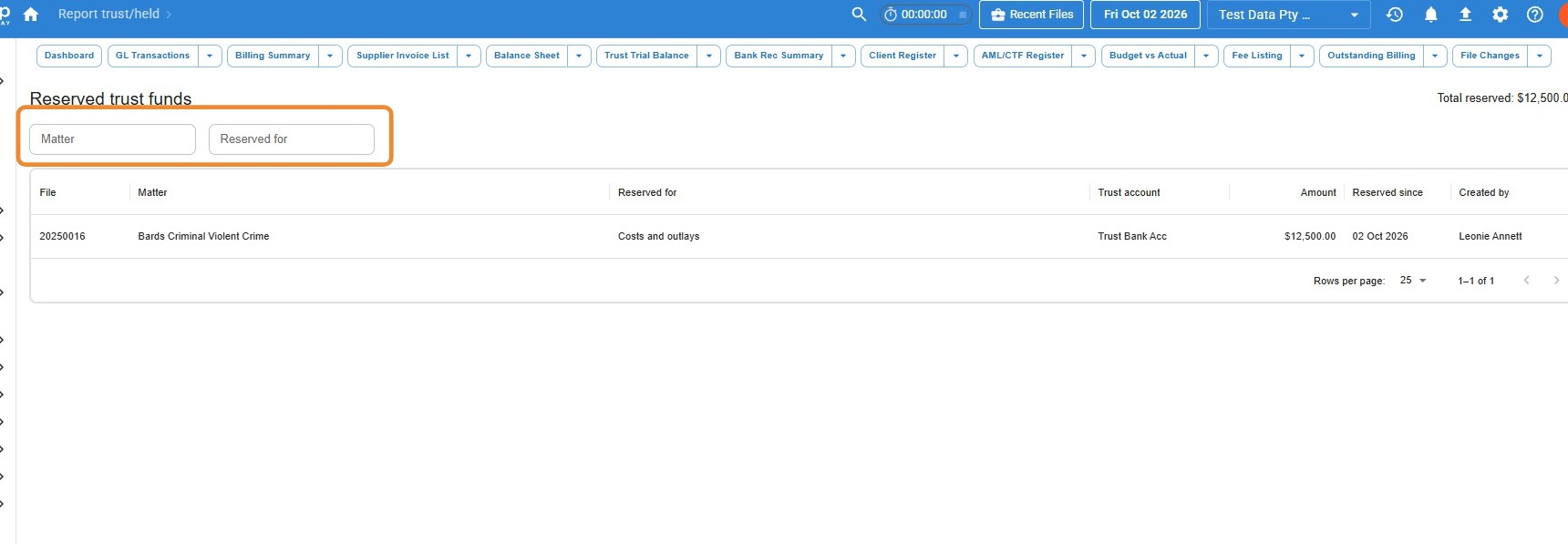
    Reserved trust funds report in Law App with the Matter and Reserved for search boxes highlighted above a list showing file, matter, reserved for, trust account, amount, reserved since and created by

    Updated on 2 October 2026

    Leave a Reply

    Your email address will not be published. Required fields are marked *